Most people focus only on saffron colour while checking purity. But sometimes, even the way saffron strands feel in the hand can reveal important details.
One simple observation people often overlook is flexibility.
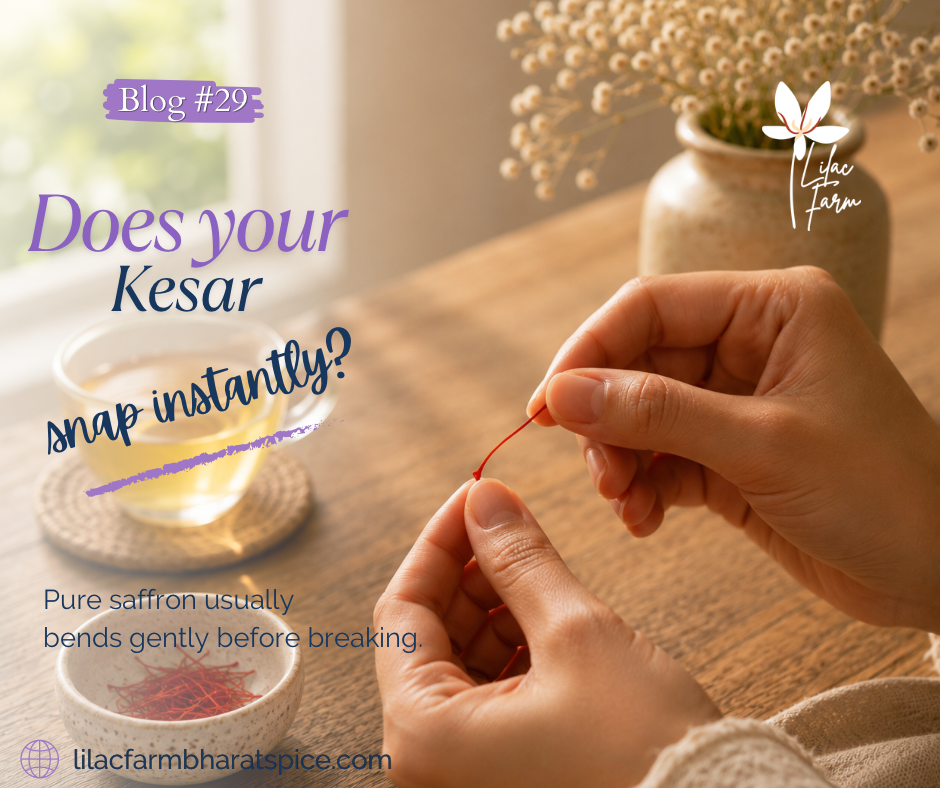
Pure saffron usually feels slightly flexible when handled gently. A strand may bend softly before eventually breaking. The texture often feels natural rather than extremely dry or brittle.
Artificial or heavily processed materials can behave differently.
In some cases, fake strands snap immediately with very little flexibility. They may feel unusually dry, stiff, or fragile from the beginning. This is one reason why texture can sometimes become an important part of understanding saffron quality.
Of course, storage conditions also matter. Even pure saffron can become drier over time if exposed to excess heat, sunlight, or improper storage. This is why the break test should never be treated as a dramatic “final verdict” on its own.
Instead, it works best as one small observation among many. The goal is not to aggressively break saffron strands.
It is simply to notice whether the saffron feels naturally balanced while being handled gently.
Rather than asking:
-> “Did the strand snap immediately?”
It may help to ask:
-> “Did the saffron feel naturally flexible or overly dry?”
This calmer approach often helps people understand saffron more confidently without becoming overwhelmed by exaggerated internet testing methods.
Pure kesar usually reveals itself gradually — not only in colour and aroma, but also in texture and handling.
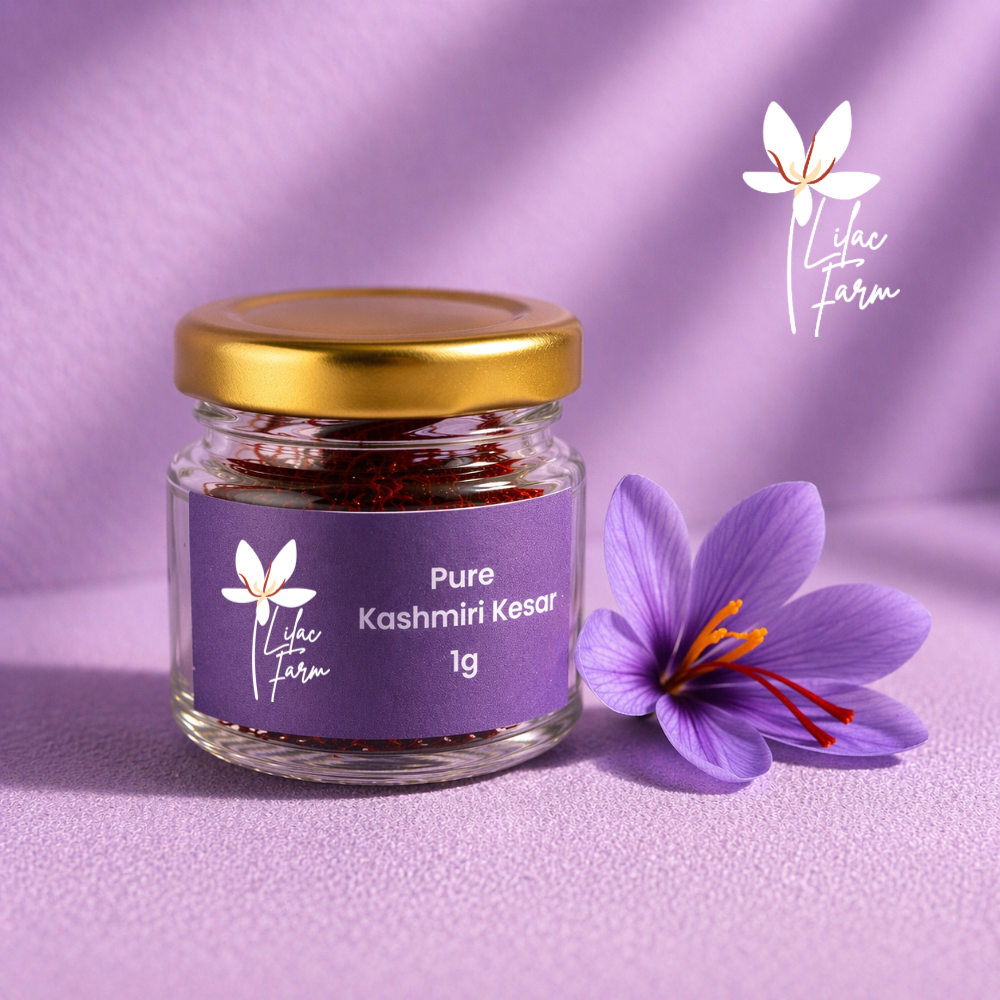
At Lilac Farm, we believe saffron understanding should feel practical, balanced, and honest, which is why we focus on Pure Kashmiri Kesar valued for its naturally careful character.
If you would like to experience saffron that feels naturally balanced in colour, aroma, and texture, you may explore Lilac Farm’s Pure Kashmiri Kesar through the button below.
Currently available for delivery within Bangalore.