
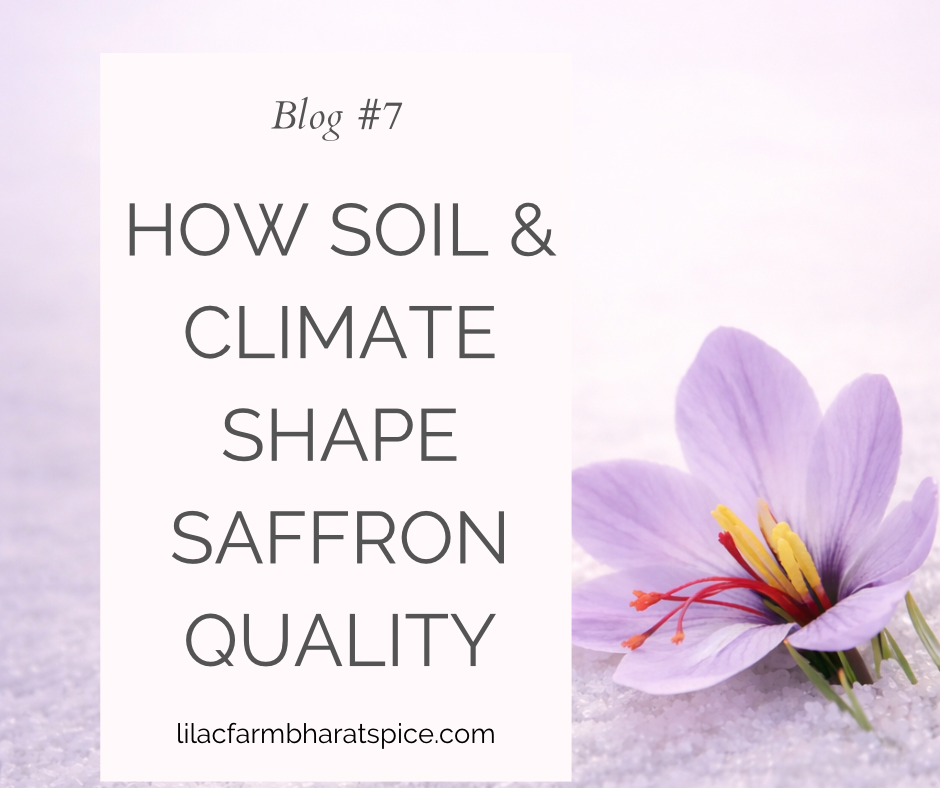
The land writes its own story into every thread.
Saffron is often spoken about as if it is the same everywhere – the same threads, the same colour, the same fragrance. But saffron is deeply shaped by the land where it grows. Its soil, its sunlight, its altitude, and even the coldness of its nights leave an imprint on its character.
Two threads may look identical, yet behave entirely differently simply because they were raised under different skies.
This is why understanding the role of soil and climate helps you appreciate saffron not just as an ingredient, but as a living expression of its environment.
1. Altitude – Where Cooler Air Protects Aroma
Saffron grown at higher altitudes, like in Kashmir, benefits from:
- Crisp cold nights
- Soft daytime sunlight
- Slower moisture loss
- Gentler maturation of the flower
These conditions protect delicate compounds like safranal, which is responsible for saffron’s warm, soothing aroma. In lower altitudes or hotter regions, aroma fades faster because the heat weakens these compounds. Altitude is the quiet guardian of fragrance.
2. Soil Minerals – Nature’s Gentle Nutrition
Saffron grows best in soil that is rich in minerals yet naturally drained.
Kashmir’s soil contains:
- Potassium
- Magnesium
- A unique mineral balance that supports crocin and picrocrocin formation
These minerals determine:
- Thread thickness
- Depth of flavour
- Smooth colour release
Good soil doesn’t just hold the plant – it shapes the plant.
3. Temperature Fluctuations – The Natural Strength Builders
Saffron thrives when days are mildly warm and nights are cold.
This contrast:
- Slows the drying of petals
- Increases aromatic strength
- Preserves essential oils inside the threads
Regions with consistent heat cannot produce the same balance – threads dry too quickly and lose their internal richness. Temperature rhythm is what gives saffron its calm, grounded character.
4. Sunlight – Soft, Not Strong
Gentle sunlight allows saffron to mature slowly.
Harsh, direct heat forces the flower to rush through its growth cycle, weakening both aroma and compounds. This is why the soft autumn sun of Kashmir is ideal – it nudges the flower awake but never overwhelms it. Saffron grown in gentle sun tastes and smells gentle too.
5. Climate + Craftsmanship = True Quality
Even the best land needs careful hands.
Traditional farmers in Kashmir:
- Pick flowers before sunrise
- Dry stigmas with patience
- Protect threads from overheating
- Use slow, natural methods
When climate and craftsmanship come together, saffron becomes something rare – warm, balanced, and naturally aromatic.
Why Lilac Farm Celebrates This Natural Balance
We work only with Kashmiri Kesar because its quality is written by nature itself. The climate gives it aroma, the soil gives it strength, and the altitude protects its purity. When you experience saffron shaped by land and climate, you feel the difference instantly – not in colour, but in calmness.
If you’d like to experience saffron shaped gently by Kashmir’s soil and climate, explore Lilac Farm’s Pure Kashmiri Kesar on our website.
Currently available for delivery within Bangalore.